


Plymouth’s Identity Crisis at the Gateway to Cornwall


Plymouth’s Identity Crisis at the Gateway to Cornwall
Plymouth sits in one of the most useful positions in the South West, yet it often speaks about that position as if it were a complication rather than an advantage.
The city is not just near Cornwall. It is pressed up against it. Cross the Tamar and the county changes. The railway, the A38, the bridges, the ferries, the waterfront, the hills beyond the Sound, all of them make Plymouth feel like a frontier city. That should be one of its clearest strengths.
Instead, Plymouth often seems caught between two stories.
One story says Plymouth is a proud Devon city with its own naval, civic and maritime identity. The other says Plymouth is the natural urban gateway to Cornwall, a place where visitors can land, stay, eat, shop, explore and then move west. Both stories are true. Yet they rarely sit together comfortably.
That tension has consequences. Cornwall does not tend to celebrate Plymouth as part of its visitor offer. Plymouth, in turn, does not fully fold Cornwall’s world-class attractions into its own identity. The result is a missed opportunity on both sides of the Tamar.
Plymouth is strongest when it accepts that it is a frontier city
Plymouth’s geography is not neutral. It shapes how the city is used, how it is imagined and how it is sold.
It is the last major city before Cornwall for many people travelling west. It has the rail links, the road connections, the ferry port, the university, the hospital, the bigger retail centres, the sizeable accommodation base and the year-round working city feel. It is big enough to support visitors in a way that smaller Cornish towns often cannot, especially outside peak season.
At the same time, Plymouth is not simply a service station before Cornwall begins. It has its own strong reasons to visit. The Hoe, the Barbican, Royal William Yard, the Mayflower Steps, the waterfront, the naval story and the city’s post-war architecture all give it a distinct character. It is not a Cornish town and should not pretend to be one.
The problem is that Plymouth’s identity can become defensive. It often leans hard into what makes it separate from Cornwall, when its position beside Cornwall is one of the things that makes it unusual.
This is the heart of Plymouth’s Identity Crisis at the Gateway to Cornwall. The city’s best asset is also the thing it seems least sure how to talk about.
A frontier can be awkward. It can produce rivalry, confusion and anxiety about belonging. But frontier cities are often fascinating because they contain overlap. Plymouth has Devon behind it, Cornwall beside it and the sea in front of it. Few English cities have such a sharp set of edges.
That gives Plymouth a rare role. It can be:
A maritime city with a national naval story
A base for exploring east Cornwall and the Rame Peninsula
A practical arrival point for international visitors
A place where Devon and Cornwall meet without merging
A city break that can lead into coast, moor and garden landscapes
Those are not contradictions. They are layers. Plymouth’s challenge is that it has not arranged them into a confident public story.
The Devon and Cornwall rivalry narrows the imagination
County rivalry can be fun. It gives people jokes, edge and identity. Devon and Cornwall both have strong local pride, and that pride matters. Cornwall in particular has a distinct cultural history, a recognised minority language revival and a powerful sense of place. It is not just a western extension of Devon.
Yet rivalry becomes limiting when it stops people seeing practical shared value.
Plymouth suffers from this more than most places because it is so close to the boundary. In many Cornish minds, Plymouth is not a gateway to celebrate. It is the big city over the bridge. It is useful, but not loved. People may travel there for hospital appointments, shopping, trains, work, nightlife or practical services, then return west without feeling that Plymouth is part of their own regional story.
That is understandable. Cornish identity has often been built by resisting absorption into broader South West labels. To some, praising Plymouth as a gateway to Cornwall may feel like giving the city a role it has not earned, or allowing an English city outside Cornwall to speak on Cornwall’s behalf.
Yet the visitor does not always think in county loyalties. Someone arriving from London, Manchester, Bristol, France, Germany or the Netherlands is less likely to draw a hard emotional line at the Tamar. They are planning a trip. They want good transport, coast, food, culture, views, heritage and places that feel worth their time.
A traveller can spend a morning in Plymouth, cross into Mount Edgcumbe, drive towards Kingsand and Cawsand, continue into deeper Cornwall, and see it all as one flowing experience. The map says the county changes. The day out says the journey has widened. When local rivalry dominates, that wider visitor experience gets broken into pieces.
Plymouth may promote itself. Cornwall may promote itself. East Cornwall may market its villages and coasts. But the obvious combined offer often goes underused: stay in Plymouth, cross the Tamar, reach Cornwall quickly, return to a city with restaurants, theatres, transport and a working waterfront. This does not require Cornwall to surrender its identity. It requires a more mature regional confidence. Cornwall can remain Cornwall. Plymouth can remain Plymouth. The crossing between them can still become part of the appeal.

Plymouth does not fully use Cornwall’s international pull
Cornwall has attractions with international recognition. The Eden Project, St Ives, Tintagel, the South West Coast Path, Porthcurno, Land’s End, the Minack Theatre, surf beaches, fishing villages and garden landscapes all carry a strong image beyond the region. Not every visitor knows the details, but many know the idea of Cornwall. Plymouth is close enough to benefit from that interest, especially for trips focused on south-east Cornwall and the eastern half of the county. Yet the city’s public identity often treats Cornwall as nearby rather than integral to the visitor proposition.
There is a difference.
“Cornwall is nearby” sounds like a footnote. “Plymouth is the city gateway to Cornwall” sounds like a role.
The second version gives the city a clearer function. It helps a visitor understand why they might choose Plymouth over a smaller coastal base. It also helps Plymouth explain itself without trying to compete directly with Cornish villages or resorts. Plymouth cannot out-Cornwall Cornwall. That would be false and would annoy people on both sides of the Tamar. Instead, it can offer what Cornwall often lacks in its most visited places:
City-scale accommodation
Stronger public transport links
More wet-weather options
A broader evening economy
Direct access to both Devon and Cornwall
A waterfront city break before or after rural travel
That positioning also helps Plymouth avoid a common trap. Too often, the city markets itself only through heritage, the sea and regeneration. Those matter, but they can feel inward-looking if not connected to a wider journey.
A visitor rarely chooses a place only because of its civic identity. They choose based on what a trip allows them to do. Plymouth allows people to stand on the Hoe, eat by the water, take a boat across the Sound, cross into Cornwall, explore the Rame Peninsula, then return to a city hotel. That is a distinct and marketable experience. The city does not need to dilute its identity. It needs to add context around it.
A stronger message would say: Plymouth is a maritime city, a Devon city and the eastern threshold of Cornwall. It is where urban South West life meets one of Britain’s most recognisable visitor regions.That is much more compelling than treating the Tamar as a full stop.
The city needs a bigger story, not a borrowed one
There is a risk in any gateway identity. If handled badly, the gateway becomes secondary. It becomes the place people pass through on the way to somewhere better. Plymouth must avoid that.
The answer is not to market the city as a car park for Cornwall. It is to show that the gateway itself has value. A good gateway adds meaning to the journey. It gives people arrival, orientation and contrast.
Think of how successful border and port cities often work. Their appeal comes from exchange. They have traces of elsewhere. They gather movement. Their food, streets, accents and architecture tell stories about arrival and departure. Plymouth has this in abundance, from its naval history to its ferry routes, from the Barbican to the ships in the Sound. The gateway role should strengthen that identity, not replace it. A more confident Plymouth story could be built around three truths.
Plymouth is a city of departure.
Ships, naval history, migration stories, ferries and sea routes all make movement part of its character. The city already owns this story. It can extend it westward across the Tamar.
Plymouth is a city of edges.
It sits between city and coast, Devon and Cornwall, land and sea, military and civilian life, heritage and reconstruction. Those edges make it distinctive. They should be embraced rather than softened.
Plymouth is a city that opens onto wider journeys.
Dartmoor lies to the north. The South Hams sit to the east. Cornwall begins to the west. The sea opens south. Few cities can offer that range so plainly.
This is not a branding trick. It is a more honest reading of the place.
At present, Plymouth can feel as if it is trying to prove it is enough on its own. It is enough on its own, but that is not the most useful argument. Great places do not shrink when they acknowledge their neighbours. They become easier to understand.
The city should not ask Cornwall to celebrate it uncritically. Nor should it expect Cornish communities to centre Plymouth in their own sense of place. But Plymouth can still speak more fluently about the relationship. It can frame Cornwall as part of the visitor journey without claiming Cornwall as its own.
That distinction matters.
There is a respectful way to say: this city is one of the best starting points for Cornwall. There is also a clumsy way to say: Cornwall belongs to our offer. Plymouth needs the first, not the second.
What a better gateway identity could look like
A stronger identity would show up in small, practical ways. It would not need one grand slogan. It would need consistency.
Tourism pages could group Plymouth with nearby Cornish day trips where the travel times and routes make sense. Hotels could describe car-free or low-car itineraries across the water. Ferry and boat trips could be presented as part of the city’s character, not just activities. Rail and road content could explain Plymouth as a natural point of arrival for cross-Tamar travel.
Local food and culture could also tell the story better. Plymouth’s markets, restaurants and waterfront venues can reflect the produce and traditions of both sides of the Tamar without pretending the identities are the same. The city already sits in a shared food region shaped by fish, dairy, orchards, farms and the sea. That connection deserves more confidence.
There is also room for more cross-border cultural programming. Events that link Plymouth with the Rame Peninsula, Saltash, Looe, Cawsand, Mount Edgcumbe and wider east Cornwall would make the relationship visible. Not as a takeover. As a shared threshold.
The language should be careful. Words matter in a place where identity carries history.
Useful phrases might include:
The gateway to east Cornwall
A city beside the Tamar
The urban edge of the Cornish journey
Plymouth and the Tamar crossings
A base for Devon, Cornwall and the coast
Less useful phrases would imply ownership or blur Cornwall into a generic South West product. That would only deepen mistrust. The prize is not just tourism. A clearer frontier identity could help Plymouth feel more distinctive to residents, students, investors and visitors. It could give the city a sharper answer to the question it has long struggled with: what kind of place is Plymouth?
It is not Bristol by the sea. It is not Exeter with a naval base. It is not Cornwall’s spare room. It is a port city at the meeting point of powerful geographies.
That is enough to build on.
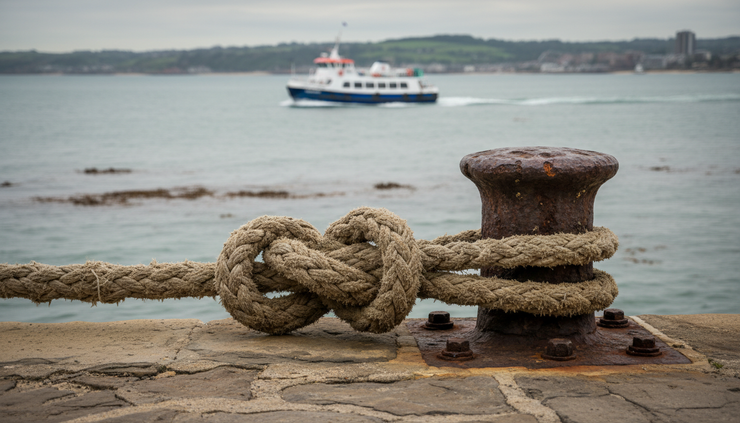
The Tamar should be a bridge in the story, not a wall
Plymouth’s conflicted identity comes from a real tension. The city benefits from Cornwall’s pull, but it is not Cornish. Cornwall benefits from Plymouth’s services and access, but does not always want Plymouth close to its cultural story. The rivalry is old, emotional and sometimes useful. It keeps identities sharp.
But when rivalry becomes the main frame, everyone loses something.
Plymouth loses the chance to present itself as the most practical and interesting city base for a Cornish journey. Cornwall loses a nearby urban partner that can support visitors without placing more pressure on smaller communities. Visitors lose a clearer, richer way to understand the eastern gateway to the peninsula.
The Tamar is a boundary. It always will be. Yet it is also a crossing, a view, a route and a daily fact of life. Plymouth’s future identity should make more of that.
The city does not need to choose between being proudly Plymouth and being the gateway to Cornwall. Its strength lies in being both, honestly and confidently. The frontier is not the problem. The problem is failing to claim it.


Comments