


How Brittany Ferries Links Plymouth to France and Spain and Strengthens Its Identity


Brittany Ferries Links Plymouth to France and Spain and Strengthens Its Identity
A city is shaped by the routes that leave it. For Plymouth, the ferry link across the Channel and down to northern Spain is more than a transport service. It is part of the city’s character, a visible reminder that Plymouth looks outwards.
Brittany Ferries gives that identity a physical form. The ships at Millbay, the flow of cars and foot passengers, the road signs to the ferry port, the promise of Roscoff or Santander on the horizon, all of it tells a simple story: Plymouth is a British coastal city with a direct European outlook.
That matters for locals, visitors, investors, students, tourism businesses and anyone trying to explain what makes Plymouth different. The city has a powerful maritime past, but Brittany Ferries helps turn that history into something active, modern and commercially useful.
Plymouth’s identity has always faced the sea
Plymouth is not a city that happens to sit by the water. The sea is central to how the city works, how it is remembered and how it presents itself.
Its naval history, its dockyards, its connection with exploration, migration and trade, and its natural harbour all help place Plymouth in the national imagination. The city carries a stronger maritime identity than most places in the UK. That identity can be inspiring, but it can also risk becoming too focused on the past.
This is where the ferry connection matters.
Brittany Ferries keeps Plymouth’s maritime role moving in the present tense. It is not only about old voyages, famous ships or historic departures. Each sailing creates a live connection with mainland Europe. It shows that Plymouth remains a working port city, not just a heritage destination.
The routes to France and Spain also give Plymouth a useful distinction. Many British cities talk about being connected to the world. Plymouth can point to a ferry terminal and a ship on the water. The link is practical, visible and easy to understand.
That gives the city a strong story to tell:
Plymouth is a gateway to Europe.
Plymouth is part of a western seaboard community, not just a south-western endpoint.
Plymouth’s maritime identity still supports trade, tourism and daily life.
Plymouth offers access to France and Spain without needing an airport experience.
This kind of identity has value because it feels real. It is rooted in place, geography and lived experience.
Brittany Ferries gives Plymouth a European rhythm
The arrival and departure of ferries change the feel of a city. They bring travellers, languages, number plates, campervans, cyclists, freight traffic and holiday energy. They create small but repeated moments that remind people they are living in a place connected to somewhere else.
For Plymouth, Brittany Ferries adds a European rhythm to the year.
Sailings to Roscoff connect the city with Brittany, a region that shares a strong coastal culture, a proud local identity and a close relationship with the sea. The connection feels natural rather than forced. Plymouth and Brittany both understand harbours, fishing communities, weather, food culture and the pull of the Atlantic edge.
The route to northern Spain adds another layer. Santander gives Plymouth a direct link to Cantabria and beyond, opening a route into Spain that suits families, touring travellers, motorcyclists, walkers and people who prefer to take their own vehicle. It also gives Plymouth a broader European position than many people might expect from a city in Devon.
This matters because identity is built through repetition. A city becomes known for the things people see, hear and use again and again. Ferries are highly visible. They create a sense of movement that even non-passengers recognise.
A person walking near the waterfront may not be travelling that day, but the ferry still says something to them. It says Plymouth is connected. It says Europe is near enough to reach by sea. It says the city’s edge is also a doorway.
The ferry routes strengthen Plymouth’s place brand
Place branding works best when it grows from something genuine. A city cannot simply claim a personality and expect people to believe it. The strongest brands come from assets that people can point to, visit and experience.
Brittany Ferries is one of those assets for Plymouth.
The city can use the ferry connection to support several brand messages at once. It speaks to heritage, travel, trade, lifestyle and culture. Few single features can do that so cleanly.
A university city might promote learning. A port city might promote maritime heritage. A tourism city might promote access to coast and countryside. Plymouth can connect all of these ideas through the ferry link.
The brand story becomes much stronger when it is grounded in movement:
Plymouth is not at the end of the line. Plymouth is a point of departure.
That is a powerful message for a city that sometimes has to fight the idea that it is remote. On a UK map, Plymouth can appear far from London, Birmingham or Manchester. The ferry changes the frame. It places Plymouth within a European coastal network rather than at the far south-western edge of England.
That shift is useful for tourism campaigns, cultural partnerships and civic pride. It helps people see Plymouth as outward-facing, not tucked away.
It also gives businesses a clearer way to talk about the city. Hospitality venues can position Plymouth as a launch point for continental travel. Food and drink producers can tap into the shared coastal culture of Devon, Brittany and northern Spain. Cultural events can build on real links with French and Spanish regions rather than using Europe as a vague theme.
The best branding is not decoration. It is a clear story that people recognise as true.
Plymouth’s ferry links make the city’s European identity practical, not abstract.
France and Spain add depth to the visitor offer
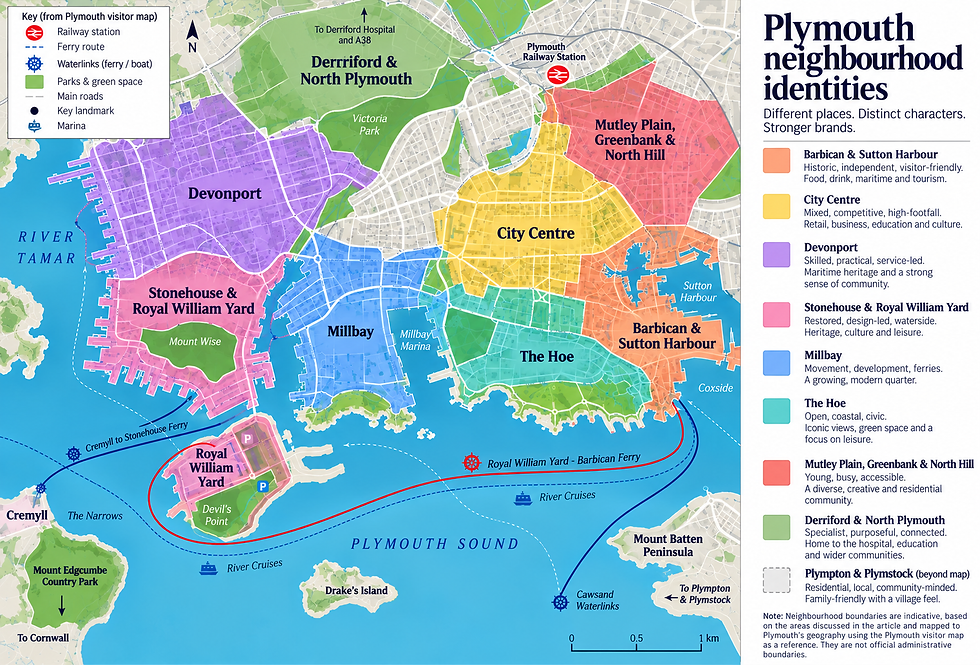
For many visitors, Plymouth already offers a strong mix: the waterfront, the Barbican, the Hoe, the Royal William Yard, marine attractions, nearby moorland and access to the wider South West. The ferry links add another reason to see the city as a travel hub rather than simply a destination.
That hub role has real value.
Some passengers stay before or after a sailing. They book hotels, eat in local restaurants, visit shops, use taxis and spend time around the waterfront. Even short stays can support the visitor economy. When a travel route becomes part of a city’s routine, local businesses can build around it.
The link also works in the other direction. Plymouth becomes more accessible to visitors from France and Spain. The city can present itself as a natural UK arrival point for people who want to explore Devon, Cornwall, Dartmoor and the wider South West.
This is especially useful because ferry travel attracts people with time to explore. Many bring cars, bikes, motorhomes or motorcycles. They are often looking for routes, stopovers and experiences rather than a single city break. Plymouth can benefit by making itself part of that wider journey.
There is also an emotional quality to sea arrival that airports rarely match. Arriving by ferry gives people a slow introduction to place. The coastline appears. The harbour opens. The city comes into view. That first impression can be memorable.
For Plymouth’s brand, that matters. A city seen from the water can leave a stronger mark than a city reached through a road junction.
Connectivity supports more than tourism
It is easy to think of Brittany Ferries mainly through holidays. Families heading for Brittany. Motorhomes bound for Spain. Cyclists planning a tour. Those uses matter, but they are not the whole story.
Ferry connectivity also supports Plymouth’s wider economic and cultural position.
Freight movement is part of the picture. Ferry routes allow goods to move by road and sea without relying only on longer land routes or air links. This matters for regional businesses that need practical access to European markets.
Education and research can also benefit from direct European links. Plymouth’s university, marine science community and environmental expertise all sit naturally within a broader Channel and Atlantic context. Shared seas create shared challenges, from marine conservation to coastal economies. Real transport links make collaboration feel more tangible.
Cultural exchange is another area where the ferry helps. Twinning, festivals, food culture, language learning, school trips and arts projects all become easier to imagine when there is a direct route. A connection on a map can turn into visits, partnerships and repeat relationships.
Then there is the value for residents.
A ferry route gives people a different kind of freedom. It means a holiday can begin by boarding a ship close to home. It means France and Spain are accessible without first travelling across the country. It means Plymouth residents can feel that Europe is part of their practical world, not a distant idea.
That sense of access contributes to civic confidence. Cities feel stronger when they are connected in more than one direction.
The ferry reinforces a distinctive coastal lifestyle
Plymouth’s identity is not only civic or commercial. It is also personal. People choose where to live partly through feeling. They want a place with character, routine, beauty and possibility.
Brittany Ferries adds to that lifestyle story.
There is something appealing about living in a city where a ferry to France or Spain is part of the everyday view. It suggests openness, travel and choice. It supports the idea of Plymouth as a place where coastal life is not just scenery, but a way of living.
That can help attract people who want a strong quality of life without losing connection to wider opportunities. Remote workers, creative people, families, students and skilled professionals are often drawn to places with a clear identity. Plymouth’s ferry links add texture to that identity.
The connection also supports the city’s food and culture story. Devon, Brittany and northern Spain each have rich coastal food traditions. Seafood, cider, markets, local produce and relaxed harbour life all create parallels. Plymouth can draw on these links in a natural way.
This does not mean the city should pretend to be continental. Its strength lies in being clearly itself, a Devon port with its own history and accent. The ferry links simply widen the frame. They show that Plymouth belongs to a family of sea-facing places that share common instincts.
A strong place brand often comes from this balance. It needs local character and wider relevance. Plymouth has both.
Plymouth should make more of the connection
The ferry link is already part of Plymouth’s identity, but the city could make it work harder in how it presents itself.
That does not mean turning every campaign into a ferry campaign. It means recognising Brittany Ferries as one of Plymouth’s clearest symbols of connection. The ferry should sit alongside the Hoe, the Sound, the Barbican and naval heritage as part of the city’s public story.
There are practical ways to do this.
Visitor information could join up city breaks with onward ferry travel.
Hotels and restaurants could shape offers around sailing times and stopovers.
Cultural events could build stronger French and Spanish themes through real partnerships.
Local food campaigns could highlight coastal links across Devon, Brittany and northern Spain.
Civic messaging could describe Plymouth as a sea gateway, not only a historic port.
The key is to keep the message authentic. People can spot forced branding quickly. The ferry link does not need exaggeration. It is already strong because it is real.
Plymouth’s position on the water is one of its greatest assets. Brittany Ferries helps turn that asset into movement, exchange and recognition.
A stronger identity starts with what is already true
Plymouth does not need to invent a new identity from scratch. It has the sea, the harbour, the naval story, the waterfront, the South West setting and the ferry links to France and Spain. The task is to connect these parts into a clear, confident story.
Brittany Ferries plays a central role because it makes the story visible. It shows Plymouth as a city of departure and arrival. It links local life with European travel. It supports tourism, trade, culture and civic pride.
For branding, that is gold. Not because it is a slogan, but because it is something people can see from the shore.
Plymouth’s future identity should keep looking out to sea. The ferries are already doing it.


Comments